
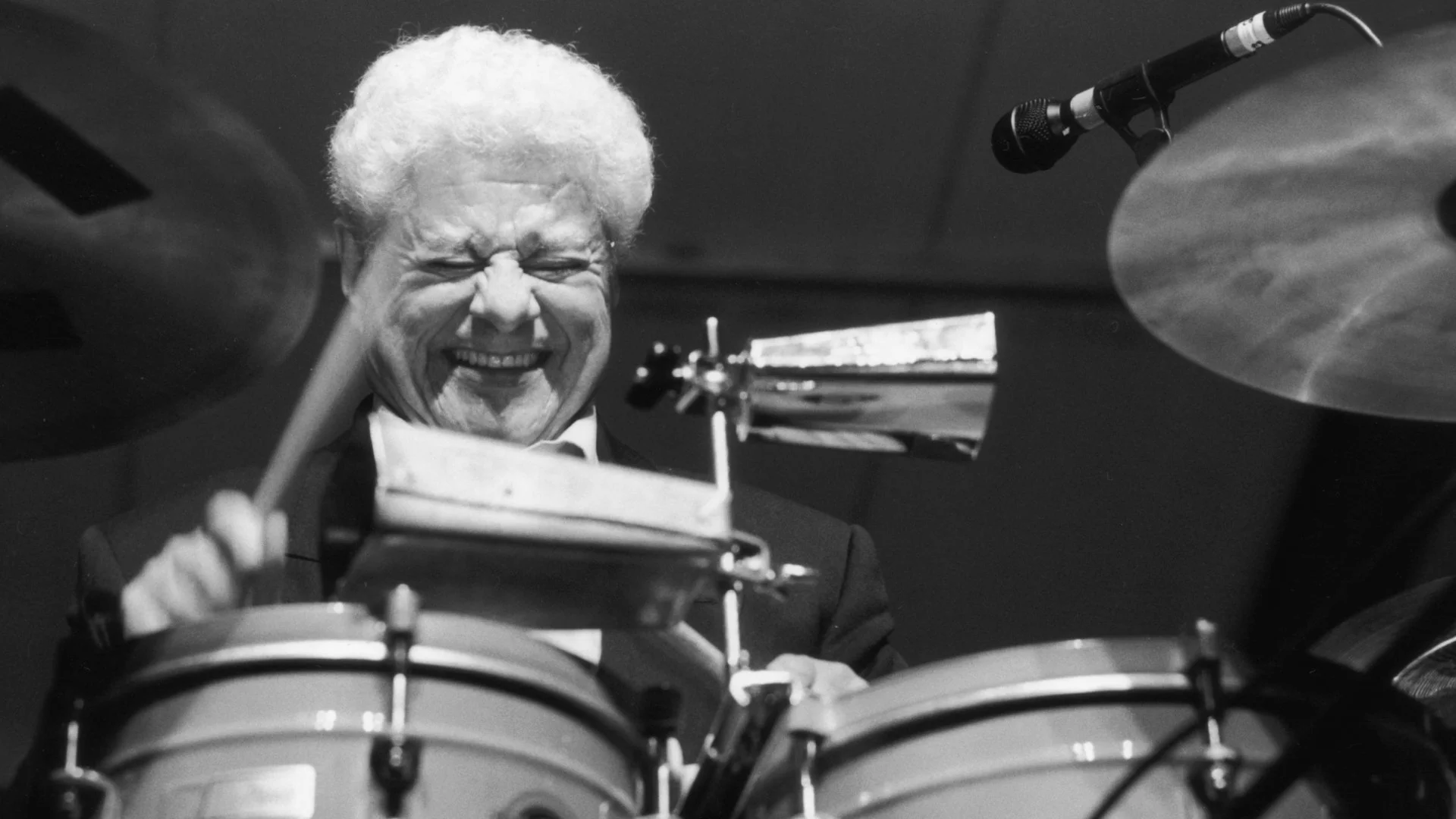
Tito Puente (1923–2000) was one of the towering figures in the history of Latin music. A renowned timbalero, vibraphonist, bandleader, composer, and arranger whose career spanned more than five decades. He helped define the sound of mambo, Latin jazz, and salsa, and became known the world over as "El Rey del Timbal" — the King of the Timbales.
FROM SPANISH HARLEM TO THE PALLADIUM
Ernesto Antonio Puente Jr. was born on April 20, 1923, at Harlem Hospital in New York City, the son of Puerto Rican parents, and grew up in Spanish Harlem. He showed an early gift for music, studying piano and percussion as a child and performing with local bands by the time he was a teenager. He originally set out to become a dancer, but a torn ankle tendon suffered in an accident ended those plans, turning his focus fully to music.
As a young man he found work many of NYC’s leading Latin bands, including the orchestra of Noro Morales and, most importantly, Machito's Afro-Cubans — one of the most prominent bands of the are which was fusing Afro-Cuban rhythms with big-band jazz. Puente was drafted into the U.S. Navy during World War II and served for three years. After his discharge in 1945, he used the G.I. Bill to study composition, orchestration, and conducting at the Juilliard School, formal training that would set him apart as an arranger and bandleader for the rest of his career.
In 1947 he formed his own group, the Piccadilly Boys, expanding it within a couple of years to include a with a powerful horn section. Renamed the Tito Puente Orchestra, the band became one of the defining ensembles of the Palladium era — the legendary New York ballroom where the mambo craze of the 1950s reached its peak. Recording for Tico and later RCA Victor, Puente turned out a string of mambo and cha-cha-chá hits that made him a household name and earned him another of his lifelong titles, "King of the Mambo." His 1958 album “Dance Mania” stands as one of the most important Latin records ever made; decades later, The New York Times named it one of the twenty-five most influential albums of the twentieth century.
EL REY DEL TIMBAL
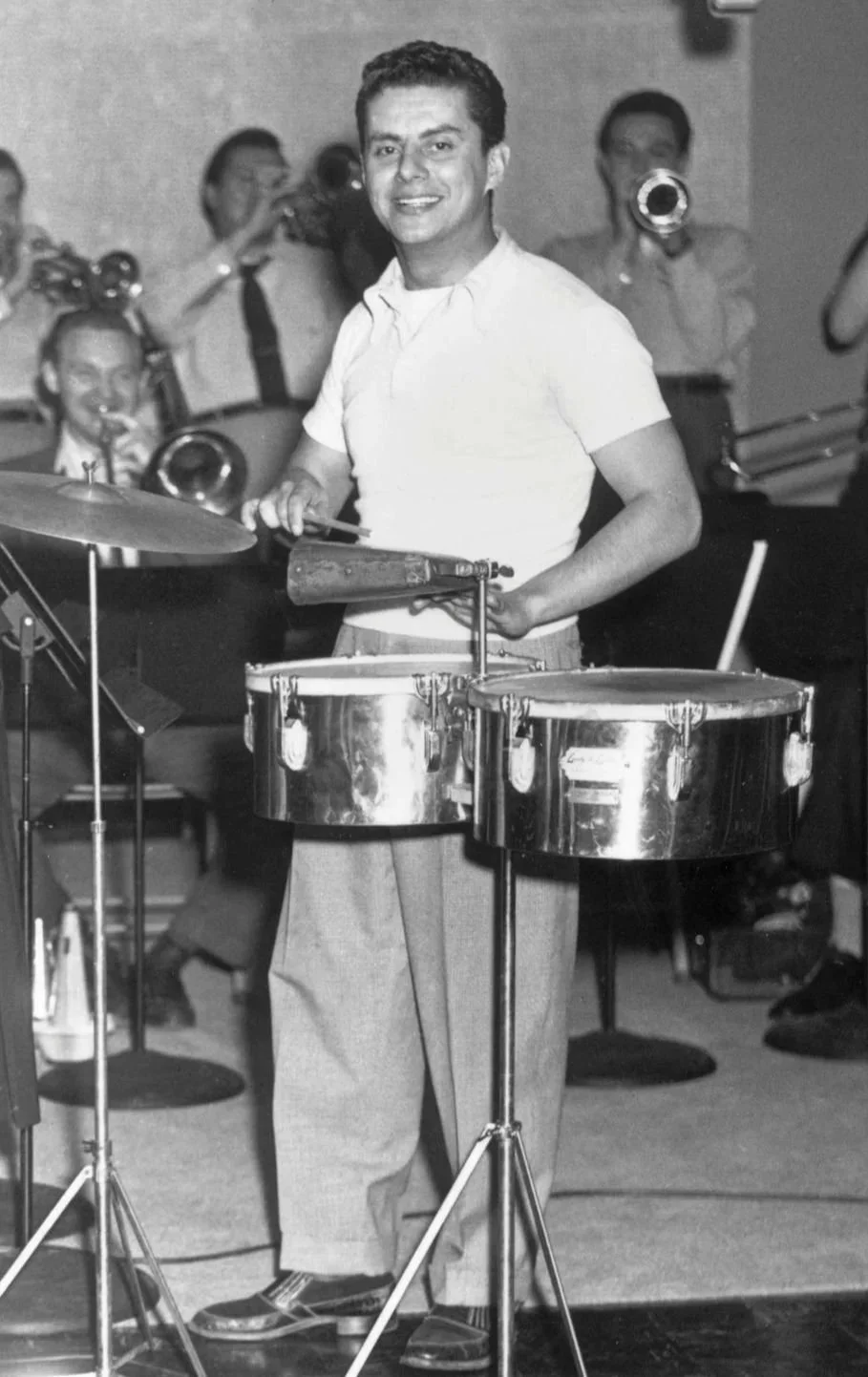
What set Tito Puente apart was his showmanship and his role in bringing the timbales to the front of the stage. He was one of the first timbaleros to prominently front his own band, setting his timbales up center stage, with a combination of intensity, virtuosity, and bravado that made the instrument a lead voice. In doing so he did a great deal to evolve the timbales' role in Latin music, with generations of timbaleros who followed building on the vocabulary he helped create.
His Juilliard training made him equally formidable as a composer and arranger. He was also a gifted vibraphonist and a capable pianist and saxophonist Among the hundreds of pieces he composed was "Oye Como Va," which first appeared on his 1962 album “El Rey Bravo” and became known to a worldwide audience when Carlos Santana recorded it in 1970 — introducing Puente's music to the rock generation and cementing the song as a standard.
Over the course of his career Puente recorded more than 100 albums and worked with a remarkable range of musicians, from Latin music stars such as Celia Cruz to jazz figures like George Shearing and Woody Herman. He toured relentlessly, playing hundreds of engagements a year well into his seventies, and appeared in films including The Mambo Kings (1992) and on television, becoming one of the most recognizable ambassadors Latin music has ever had.
SELECTED RECORDINGS
1956 – Puente in Percussion (Tico Records): A seminal, all-percussion recording that brought Puente together with Mongo Santamaría, Willie Bobo, and Carlos "Patato" Valdés — long regarded as one of the definitive statements on Latin percussion ever put to tape.
1958 – Dance Mania (RCA Victor): Puente's best-known album and one of the most important Latin recordings ever made, later named by The New York Times among the twenty-five most influential albums of the twentieth century.
1962 – El Rey Bravo (Tico Records): Features "Oye Como Va," the Puente composition that would later become a worldwide hit for Carlos Santana.
1978 – Homenaje a Beny Moré (Tico Records): A tribute to the Cuban singer Beny Moré that won Puente his first Grammy Award.
1992 – "Live" at the Village Gate (Tito Puente's Golden Latin Jazz All-Stars, RMM): A celebrated live recording with an all-star Latin jazz band including Paquito D'Rivera, Dave Valentín, and Hilton Ruiz.
AWARDS & RECOGNITION
Puente received five Grammy Awards during his lifetime, beginning with “Homenaje a Beny Moré” and continuing through “On Broadway,” “Mambo Diablo,” a fourth for his Latin jazz work, and “Mambo Birdland” in 2000. A sixth Grammy was awarded posthumously in 2001 for “Obra Maestra” (Masterpiece), his collaboration with Eddie Palmieri, and he received a posthumous Grammy Lifetime Achievement Award in 2003. Among many other honors, he was awarded the National Medal of Arts by President Clinton in 1997, received a star on the Hollywood Walk of Fame in 1990, and was recognized by the Library of Congress as a Living Legend. In 1979 he established a scholarship fund at Juilliard for Latin percussionists, helping open the door for the players who would follow him.
LEGACY
Tito Puente died on May 31, 2000, in New York City, at the age of 77. He left behind a body of work unmatched in Latin music — more than a hundred albums, hundreds of compositions, and a career that carried him from the Palladium dance floors of the 1950s to concert stages and symphony halls around the world. More than any other musician, he brought the timbales to the front of the bandstand and made the instrument a symbol of Latin music itself. His influence runs through every timbalero who came after him, and his music — above all "Oye Como Va" — remains as alive today as it was during the mambo era he helped create.
Tito Puente's story is a reminder that the timbales, and Latin percussion as a whole, can carry a musician to the very top of the musical world. If his journey has you inspired to pick up the sticks yourself, CongaChops.com is a great place to start.
START YOUR FREE TRIAL TODAY