
1945–2024 · New York City
The Spanish Harlem bongosero who spent more than 30 years in Tito Puente's orchestra, co-founded Típica 73 and helped develop LP's early instruments.
- Played with
- Tito Puente, Ray Barretto, Celia Cruz, Tito Rodríguez
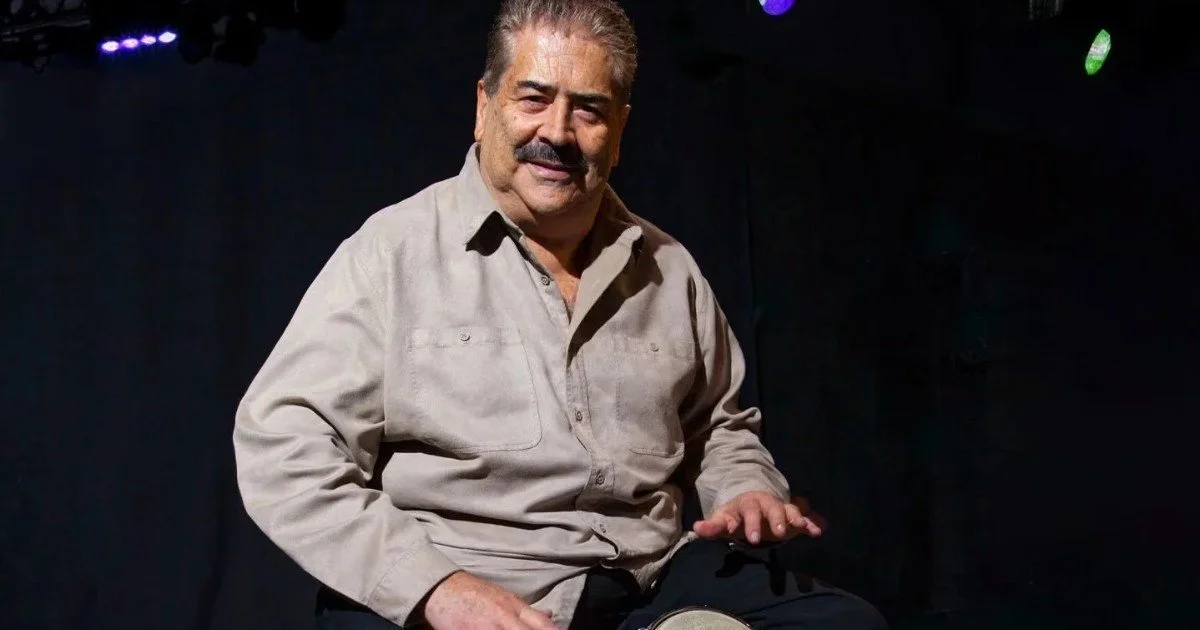
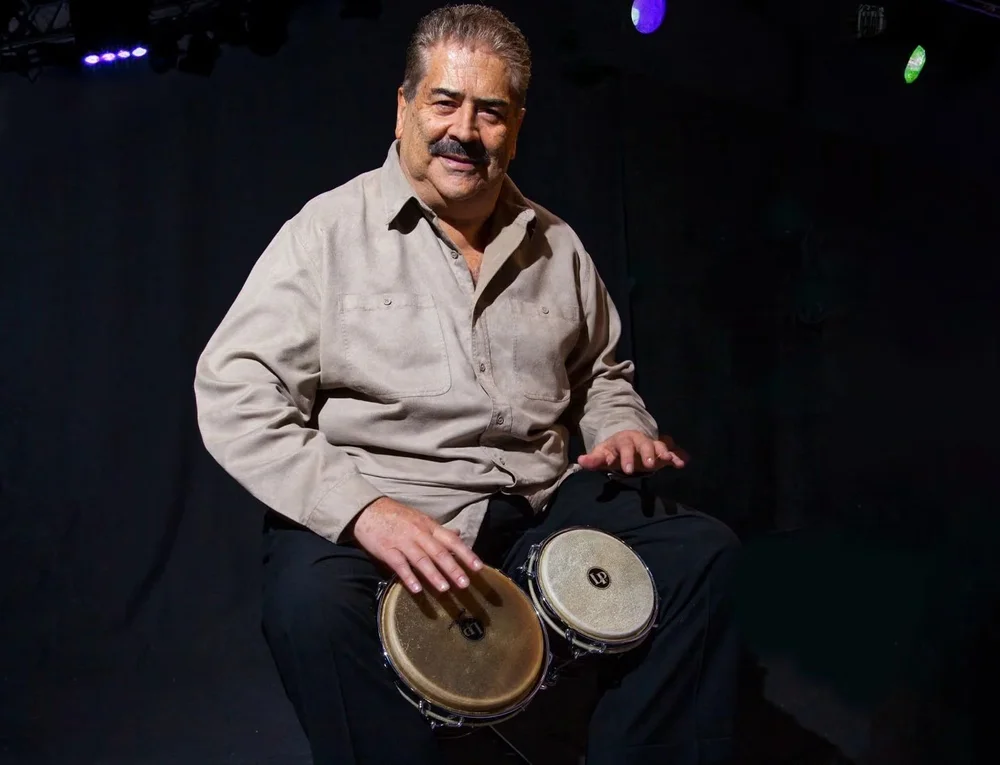
When Johnny "Dandy" Rodríguez was a teenager, he auditioned for Ray Barretto. Barretto told him he wasn't ready. His mother, the story goes, told Barretto that one day he would be. Dandy (1945–2024) became one of the most recorded percussionists of the salsa era. He played bongó in Tito Puente's orchestra, on and off, for more than 30 years. He also co-founded Típica 73 and was a first-call studio player all through the Fania years. For a lot of bongo players, his time, his sound and his taste are still the model.
A Son of El Barrio
John Rodríguez Jr. was born in New York City on September 11, 1945, to Puerto Rican parents and grew up in El Barrio, Spanish Harlem. His father, John "La Vaca" Rodríguez Sr., was a respected conguero and bongosero who played with Noro Morales, Xavier Cugat, Machito, Tito Puente and Tito Rodríguez. His mother, Tati, danced mambo at the Palladium and later hosted her own Spanish-language TV show in New York. The nickname came from his sister Jeanette. As a little girl she couldn't say "Johnny." It came out "Dandy."
As a kid he tagged along to his father's rehearsals. By junior high he was playing bongos, congas, timbales and drum set. During high school the family moved to Los Angeles for a job his father was offered. That's where Cuban percussion really grabbed him. His father was his first conga teacher. His first paying gigs, though, were on timbales.
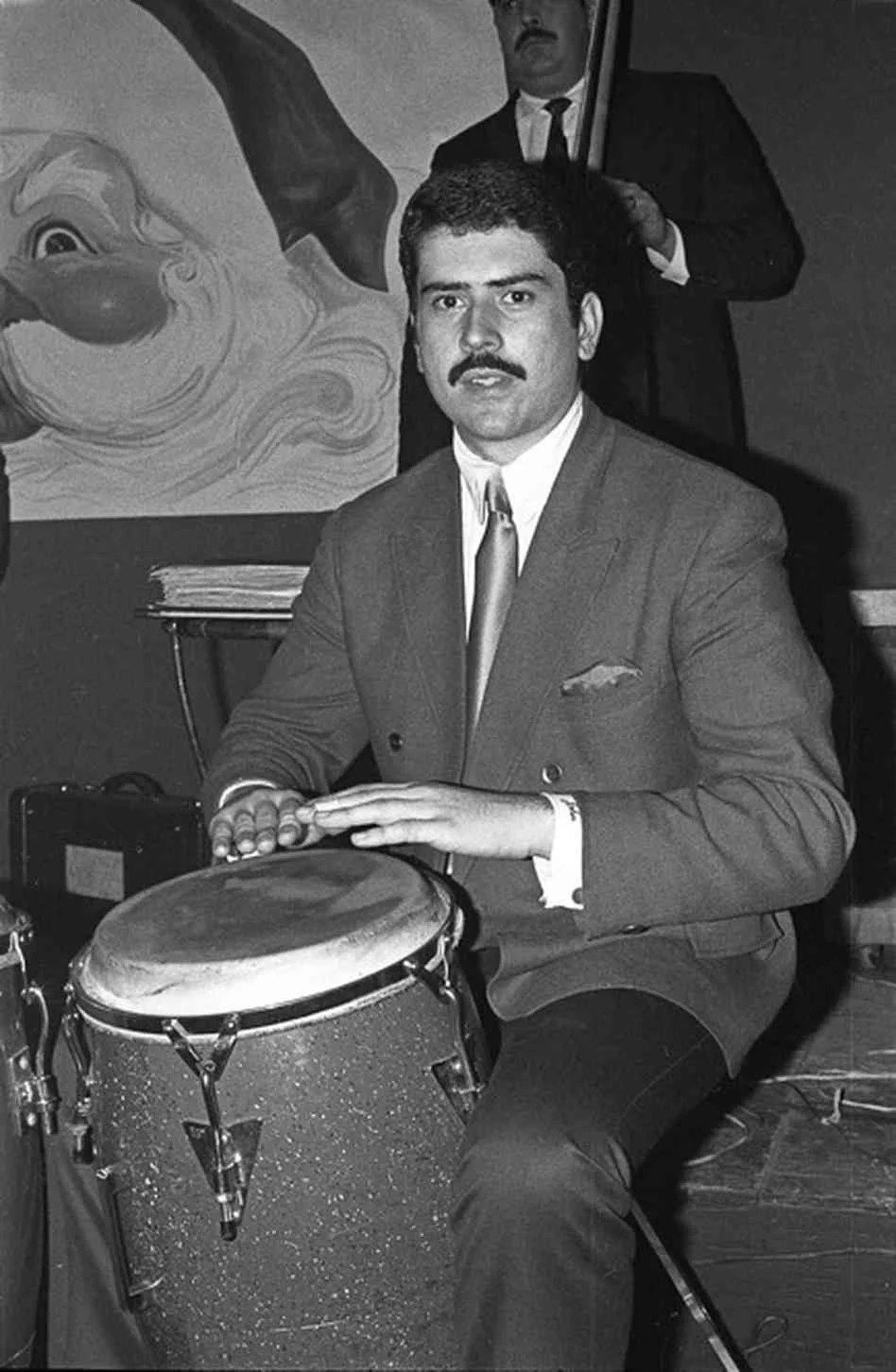
Back in New York, at 16, he was playing timbales on Saturdays with the house band at the Taft Hotel and, in his words, "just starting with the bongos." Tito Puente let him sit in at rehearsals. "Tito knew my father, and he knew me since I was a baby," Dandy said. After a few months as an apprentice he had the bongó chair. By 1962 he was playing four nights a week at the Palladium while still in high school. His first record with the orchestra was Excitante Ritmo de Tito Puente (1963). From there he kept developing his playing by listening to and learning from the bongoseros who came before him, like José Mangual Sr., Machito's bongocero, and Rogelio "Yeyito" Iglesias, who played on Cachao's descargas.
Tito Rodríguez, Barretto and Típica 73
In 1965 he recorded with the Joe Cuba Sextette on Coming at You. From 1965 to 1968 he played with Tito Rodríguez, who he said showed him the value of discipline. You can hear him with that band on Big Band Latino (1968). Then, in 1970, he joined Ray Barretto, the same bandleader who had told him he wasn't ready. He stayed through Que Viva la Música (1972), the group's last record as a working band.
In 1972 Dandy was running a weekly Monday-night descarga on Manhattan's East Side. At the end of that year it turned into a band. He left Barretto along with singer Adalberto Santiago, timbalero Orestes Vilató and other bandmates. With pianist Sonny Bravo as the other musical director, they started Típica 73, named for the year that followed. It was a cooperative, with the money split equally. The band put congas, timbales and bongó together with a horn section and later brought in jazz and rock. Its first records came out on Inca: Típica 73 (1973), La Candela (1975) and Rumba Caliente (1976).
Through the '70s he was also a first-call studio player for Fania and its labels. You can hear him on Celia & Johnny (1974), the Celia Cruz and Johnny Pacheco album. He also recorded with Cheo Feliciano, Charlie Palmieri, Willie Rosario, Richie Ray and Bobby Cruz, Conjunto Clásico, the Fania All-Stars and the Tico All-Stars. In 1977 he played congas on Fireworks with the Machito Orchestra. That made him one of the few musicians to record with all three big bands of the Palladium era, Machito, Tito Puente and Tito Rodríguez.
In 1979 Típica 73 went to Havana to play and record with Cuban musicians at the EGREM studios, with players like Tata Güines, Changuito, Guillermo Barreto, Félix Chapotín and Richard Egües. The record came out on Fania as Típica 73 en Cuba: Intercambio Cultural. René López, the historian who made the trip with them, remembered how much reverence the musicians showed for their Cuban heroes. Back home, the trip cost them. "They thought we were communists, and they started boycotting our shows," violinist Alfredo De La Fé recalled.
Back with Tito
Dandy left Típica 73 in 1979 and went back to Tito Puente's orchestra, where he played until Tito's death in 2000. The kid who had started out as an apprentice ended up running the band's business in its last ten years, while José Madera was the musical director. He was on stage for Tito's last concert, in Puerto Rico.
After Tito died, Dandy, José Madera and saxophonist Mitch Frohman started the Latin Giants of Jazz, which grew into the 21-piece Mambo Legends Orchestra. The band kept the music of the Palladium era in front of new audiences, on records like The Giants Play the Music of the Palladium (2002) and Watch Out! ¡Ten Cuidado! (2010).
Timeline
1945Born September 11 in New York City; grows up in Spanish Harlem
1962Joins Tito Puente's orchestra on bongó, while still in high school
1963First record with Tito, Excitante Ritmo de Tito Puente
1965Starts three years with Tito Rodríguez
1970Joins Ray Barretto
1972Co-founds Típica 73
1977Plays congas on Machito's Fireworks
1979Records in Havana with Típica 73; back with Tito Puente
2000sStarts the Latin Giants of Jazz, later the Mambo Legends Orchestra
2024Dies in Las Vegas, at 78
Time, Taste and the Studio
Producers knew what they were getting with Dandy. As Bobby Sanabria remembers it, producer Louie Ramírez put it this way: "Dandy was like the Rock of Gibraltar." Whether he was on bongó or congas, his playing had a groove and a swing that made him indispensable in the studio.
Dandy and Latin Percussion
Martin Cohen met Dandy at the Palladium in 1962, when Dandy was already playing with Tito and Cohen was just starting to make bongó shells. Dandy encouraged him. Over the years he played practically every instrument Cohen built and told him exactly what he thought of each one. Cohen has said that Dandy's endorsement gave the young company's drums real credibility.
In 1979 Cohen sent him to Europe as a clinician with the Latin Percussion Jazz Ensemble, alongside Tito Puente, Patato, Edy Martínez and Sal Cuevas, to show the LP instruments in Denmark, France and the Netherlands. Dandy also handled the band's business on the road. Cohen credits his bongó playing, and his way with the band's personalities, for the tour's success. It led to four more tours, including Montreux in 1980. It also opened up a new market for LP in Europe.
Selected Recordings
Excitante Ritmo de Tito Puente (Tito Puente, Tico, 1963): his first record with Tito's orchestra
Coming at You (Joe Cuba Sextette, 1965)
Big Band Latino (Tito Rodríguez, 1968)
Que Viva la Música (Ray Barretto, Fania, 1972): the Barretto band's last record before Típica 73
Típica 73 (Inca, 1973): the band's debut, with Adalberto Santiago and Orestes Vilató
Celia & Johnny (Celia Cruz and Johnny Pacheco, Vaya, 1974)
La Candela (Típica 73, Inca, 1975)
Fireworks (Machito Orchestra, Coco, 1977): Dandy on congas, completing the Palladium "Big Three"
Típica 73 en Cuba: Intercambio Cultural (Fania, 1979): recorded in Havana with Tata Güines, Changuito and Félix Chapotín
Watch Out! ¡Ten Cuidado! (Mambo Legends Orchestra, 2010)
Awards & Recognition
The instrument makers put Dandy's name on their gear. Latin Percussion made his signature bongos (added to its LP Legends series in 2009), two signature cowbells he developed with LP's factory, a signature bongo bag and Dandy bongo heads. In 2024, for the company's 60th anniversary, it released the limited-edition Zebra "Dandy" bongos. He also worked with Remo on the design of its bongo heads. Fireworks, his 1977 record with the Machito Orchestra, was nominated for a Grammy. When he died, Eddie Palmieri called his contributions to Latin music "incalculable" and remembered his presence as "one of strength and kindness."
Legacy
"I went from being a kid, coming into the band as a 16 year old to being the man running the band at the end," Dandy said. In his last decades he made it his job to pass the Palladium sound on, leading the Mambo Legends Orchestra into his 70s. "We feel as if we have been commissioned to keep this music we love in the eyes and ears of the young generation," he said in 2016.
Johnny "Dandy" Rodríguez's story is a reminder that the foundation of every great percussionist is a steady groove, a beautiful sound and good taste. If his journey has you inspired to build that foundation for yourself, CongaChops.com is a great place to start.
Start your 7-day free trialRisk free. Cancel anytime.
More Percussion Profiles
 Tito Puente
 Carlos "Patato" Valdés
Learn to play
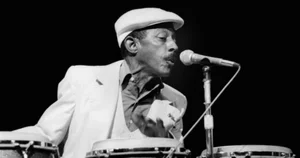
Photo credits: portrait by Martin Cohen.