
1926–2007 · Havana, Cuba
The Cuban conguero who went from Conjunto Casino to Tito Puente, Machito and Herbie Mann, played melodies across several tuned congas, and gave his name to LP's Patato congas.
- Played with
- Tito Puente, Machito, Herbie Mann, Dizzy Gillespie
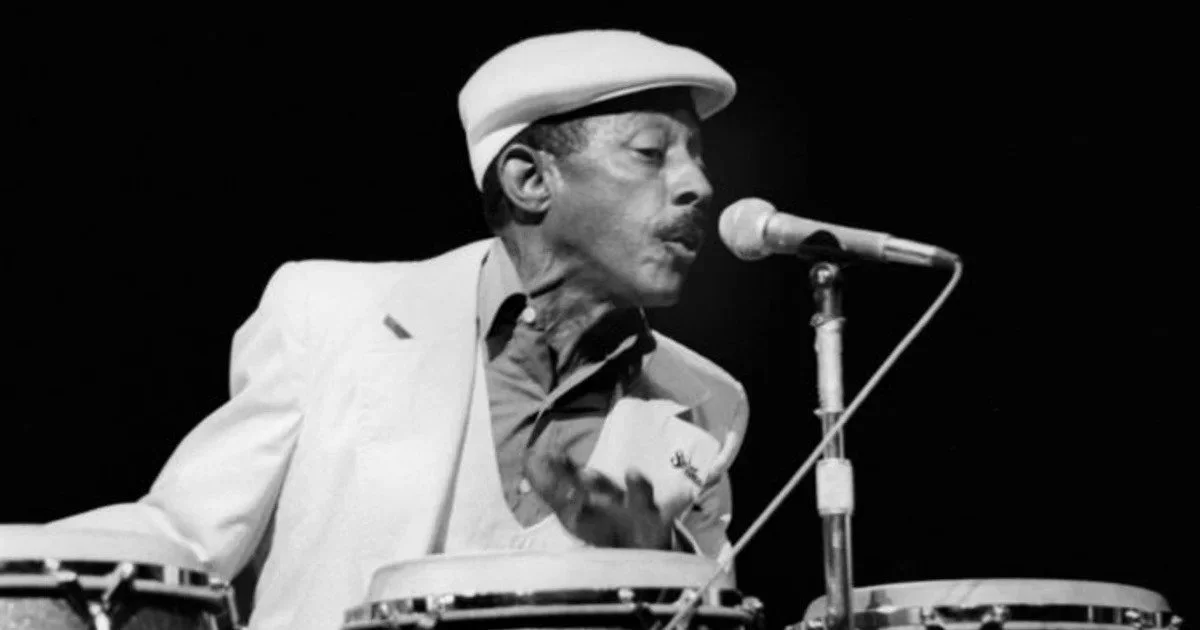
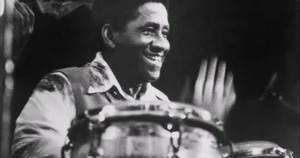
Back in late-'40s Havana, Carlos "Patato" Valdés (1926–2007) asked a friend to build him a conga with tuning keys. He wanted to play the melodies he knew from the tres across three or four drums, at a time when most congueros played one or two. He took that sound from Conjunto Casino to Tito Puente, Machito, Dizzy Gillespie and Herbie Mann. Along the way he became one of the great showmen the instrument has ever had. His nickname, Patato, was Cuban slang for someone short.
From Havana to New York
Carlos Valdés Galán was born on November 4, 1926, in Havana. His father played tres with the Havana group Los Apaches. Patato learned several instruments as a kid, the tres among them. As a boy he played rumba on wooden boxes and later played congas with the carnival comparsa La Sultana. By his teens he was working professionally.
He played congas in Alberto Ruiz's Conjunto Kubavana, alongside Armando Peraza on bongó, and in the late 1940s he filled in for the ailing Valentín Cané in La Sonora Matancera. Through the late '40s and early '50s he also played with Conjunto Casino, one of Cuba's top dance bands. He became a star on early Cuban television too. His showpiece was "El Baile del Pingüino," the penguin dance, where he moved side to side like a penguin.
Away from the cameras, he was chasing a new sound. "I wanted something different and was thinking of the textures and tuning of the tres," he said. The drum his friend built had "the head tucked under a rim and with tuning keys." With three or four of them, he could "mimic the melodic ideas I used to play on the tres."
In 1952 he toured New York with Conjunto Casino. Two years later he moved there for good, after Mongo Santamaría recommended him to Tito Puente. It didn't take long for New York to notice. His playing on Kenny Dorham's Afro-Cuban (1955) helped establish him on the jazz scene. His work on Puente's Cuban Carnival and Puente in Percussion got him noticed all over town. In 1956 he taught Brigitte Bardot the mambo in Roger Vadim's film And God Created Woman.
Machito, Herbie Mann and More Drums
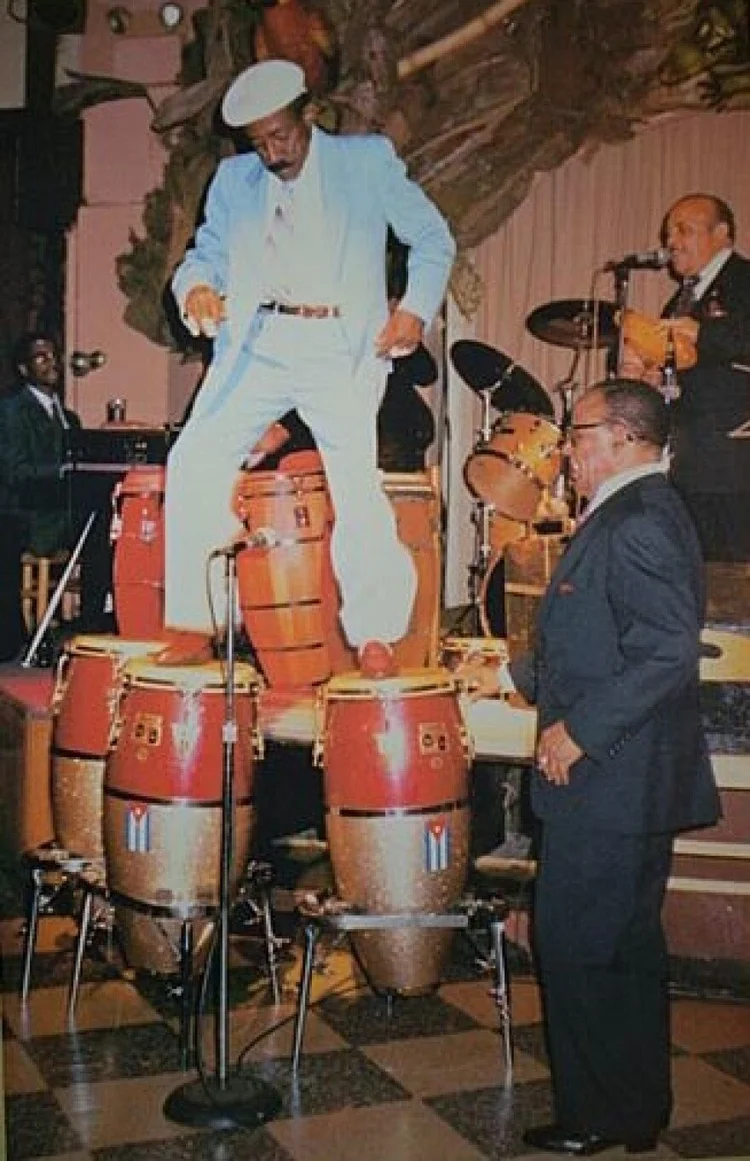
By the time Vadim's film came out, Patato was in Machito's orchestra, brought in by musical director Mario Bauzá. He stayed about five years. On the bandstand he played three, four or more congas at a time, and some nights he'd climb up and dance right on top of them.
In 1959 he joined flutist Herbie Mann, and he stayed until 1972. He's best known for those years, on records like Flautista!, Right Now and The Beat Goes On. Through the '60s he also recorded with Grant Green, Cal Tjader and Charlie Rouse (on Bossa Nova Bacchanal, recorded 1962). He played with Dizzy Gillespie, Art Blakey and Elvin Jones too.
In 1967 he made his first album as a leader, with his childhood friend, singer Eugenio "Totico" Arango. The rumba album Patato & Totico brought in Arsenio Rodríguez on tres and Israel "Cachao" López on bass. In a 1997 Latin Beat interview, quoted in Blue Note's biography, he said, "I wanted something progressive."
The Patato Conga
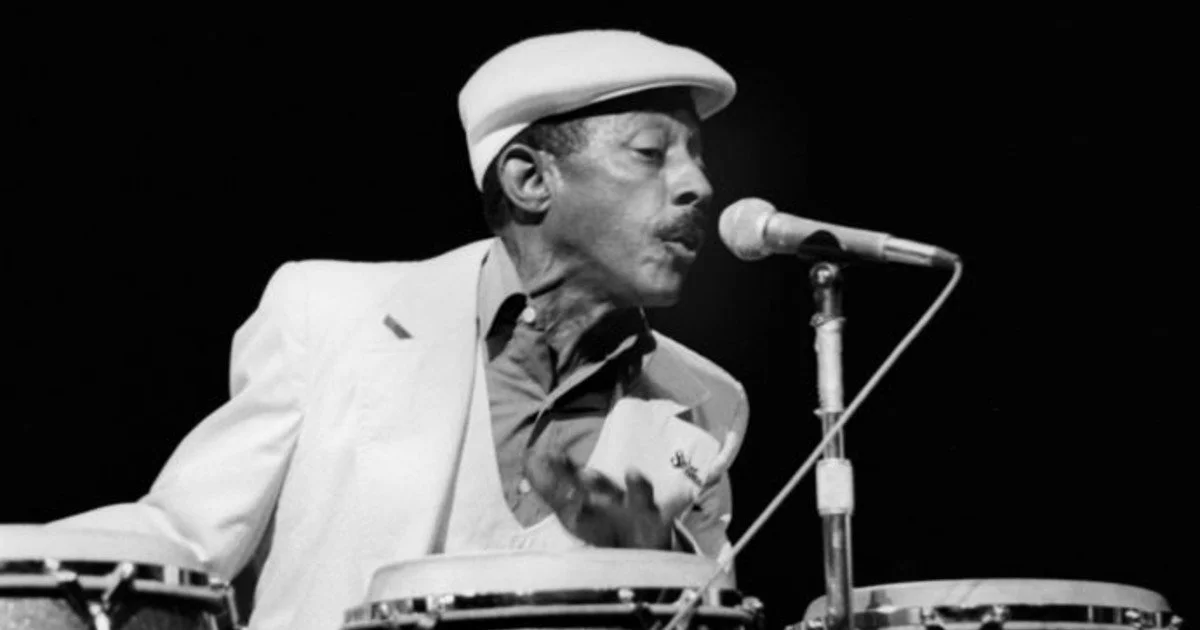
Back then a lot of congueros still tuned their drums by heating the skins, often over a can of Sterno. Patato had been after a drum with tuning keys since his Havana days. In New York he became close friends with Martin Cohen, founder of Latin Percussion. He advised the company on design in its early days. LP's Patato Model congas were first released commercially in 1978: fiberglass congas developed with Patato, tall, with a wide belly and a small bottom. LP still makes them today.
Timeline
1926Born November 4 in Havana
Late 1940sFills in for Valentín Cané in La Sonora Matancera
1952Tours New York with Conjunto Casino
1954Moves to New York; soon begins working with Tito Puente
Mid-1950sJoins Machito's orchestra for about five years
1956Teaches Brigitte Bardot the mambo in And God Created Woman
1959Starts more than a decade with Herbie Mann
1967Patato & Totico, his first album as a leader
1978LP releases the Patato Model congas
2000The Conga Kings with Cándido and Giovanni Hidalgo
2007Dies December 4 in Cleveland, at 81
Selected Recordings
Afro-Cuban (Kenny Dorham, Blue Note, 1955): one of the records that established him in New York
Puente in Percussion (Tito Puente, Tico, 1956; recorded 1955): from his years in Tito's orchestra
Flautista! (Herbie Mann, Verve, 1959): Mann's Afro-Cuban jazz record, with Patato on congas
Patato & Totico (Verve, 1967): his first album as a leader, with Arsenio Rodríguez and Cachao
Authority (Latin Percussion Ventures, 1976): Patato with his Latin Percussion Friends
Ready for Freddy (Latin Percussion Ventures)
Masterpiece: recordings from 1984–85
Ritmo y Candela (1995): with Changuito and Orestes Vilató, nominated for a Grammy
The Conga Kings (Chesky, 2000): with Cándido and Giovanni Hidalgo
Jazz Descargas (The Conga Kings, Chesky, 2001)
Awards & Recognition
His later recordings brought Grammy recognition. Ritmo y Candela, with Changuito and Orestes Vilató, was nominated for Best Latin Jazz Performance at the 1996 Grammy Awards. Ritmo y Candela II: African Crossroads was nominated in the same category in 1998. At the 2003 Grammys he shared in the award for Best Traditional Tropical Latin Album for El Arte del Sabor with the Bebo Valdés Trio.
Later Years and Legacy
LP says the drum that carries his name became one of its top-selling congas of all time. Patato & Totico is considered a turning point in Latin jazz.
Patato stayed a showman to the end. He turned up on The Cosby Show in 1986 with Tito Puente and Art Blakey and appeared in The Mambo Kings. In the '90s he led his group Afrojazzia. He finished his career with the Conga Kings, alongside Cándido and Giovanni Hidalgo, still touring at 81. He died in Cleveland on December 4, 2007.
Tito Puente called him "the greatest conguero alive today." Pianist Billy Taylor said Patato "forced us to think of new ways of approaching our own stuff." By playing melodies across a row of tuned congas, he changed what the instrument could do, and the congueros who came after him have been building on it ever since. The young conguero who wanted to play tres melodies on his drums ended up changing how the conga is played, and he has a line of drums carrying his name.
Patato Valdés didn't just groove hard, he made the conga sing melodies, one of the first to do it. That kind of mastery starts with fundamentals. Build yours, right here at CongaChops.
Start your 7-day free trialRisk free. Cancel anytime.
More Percussion Profiles
 Cándido Camero
 Mongo Santamaría
Learn to play