
Cándido de Guerra Camero (1921–2020) was a Cuban percussionist, composer, and bandleader whose career helped introduce Afro-Cuban percussion to audiences worldwide. His work across Latin and jazz contexts made him one of the most widely recorded conga players of the 20th century.
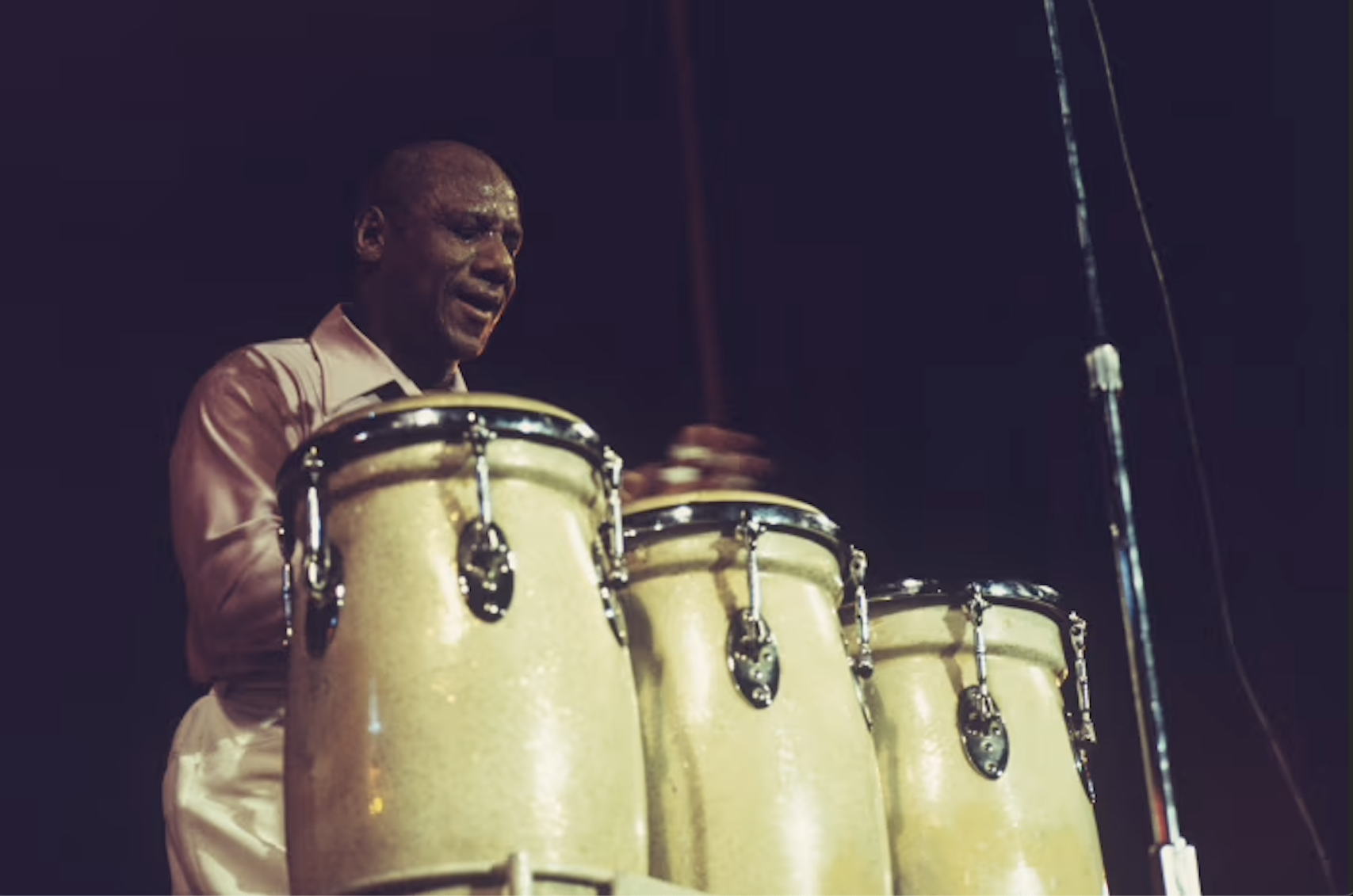
A LIFETIME IN RHYTHM
Cándido Camero was born on April 22, 1921, in “ El Cerro,” Havana, Cuba, a neighborhood known for its vibrant musical life and strong Afro-Cuban identity. Music surrounded him from an early age — local rumba gatherings, comparsa street ensembles, and family musicians shaped his rhythmic sensibility long before he ever stepped on stage. He began playing bongos and tres guitar as a child, later developing an interest in the conga drum, which was becoming more visible in Cuban popular music at the time. Without formal training, Camero learned by observing local players, imitating their phrasing, and combining traditional Afro-Cuban rhythmic ideas with his own creative instincts.
By the early 1940s, Camero had begun performing professionally with several of Havana’s leading dance bands, including Conjunto Gloria Matancera and Conjunto Kubavana. These groups were part of the movement that brought the conjunto format — with its layered percussion, trumpets, and vocals — into prominence across Cuba. His growing reputation for clarity of tone, rhythmic precision, and musical sensitivity quickly made him one of the most respected percussionists on the island. In 1946, Camero joined Orquesta de André for a tour of the United States, marking his first exposure to American audiences. When the tour ended, he chose to remain abroad, eventually settling in New York City in 1947, at a time when the Afro-Cuban jazz movement was taking root. There he became part of the city’s growing Latin music community, performing alongside Machito, Dizzy Gillespie, Stan Kenton, and other artists who were blending jazz harmony with Cuban rhythm.
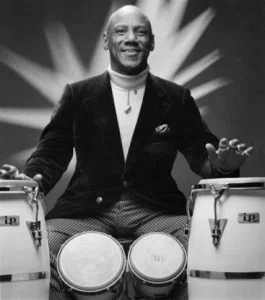
Throughout the 1950s and 1960s, Cándido recorded and performed with an extraordinary range of musicians — from Charlie Parker and Sonny Rollins to Herbie Mann and Tony Bennett — bridging the gap between Latin, jazz, and popular music. His technical mastery, impeccable timing, and understated showmanship made him a fixture in both studio and live settings. In 1956, Camero released his first solo album, Cándido, on ABC-Paramount Records. It marked the beginning of his career as a bandleader and introduced his name to a wider jazz audience. Over the following decades, he became one of the most recorded percussionists in history, contributing to projects that helped define the sound of Afro-Cuban jazz for generations to come.
SELECTED RECORDINGS
1956 – Cándido (ABC-Paramount): Debut recording as a bandleader.
1960 – The Conga Kings (Roulette): Collaboration featuring several noted percussionists.
1979 – Dancin’ and Prancin’ (Salsoul): A disco-era release featuring Afro-Cuban percussion within popular arrangements.
2001 – Inolvidable (Chesky Records): Late-career album nominated for a Grammy Award.
AWARDS & RECOGNITION
Cándido Camero received numerous honors for his contributions to jazz and Latin music. In 2008, he was named a National Endowment for the Arts (NEA) Jazz Master, the highest honor awarded to jazz musicians in the United States. He was also recognized by the Smithsonian Institution, the International Latin Music Hall of Fame, and received a Latin Grammy Lifetime Achievement Award for his lifelong dedication to music.
LATER YEARS AND LEGACY
Cándido continued performing and recording into his 90s, maintaining one of the longest active careers in Latin jazz history. He passed away on November 7, 2020, in New York City, at the age of 99. His work remains central to the study of Afro-Cuban rhythm, Latin jazz, and the history of the conga drum. For percussion students and educators, his recordings provide a valuable record of the instrument’s role in 20th-century popular and jazz music.
Cándido Camero played alongside Machito, Dizzy Gillespie, and Charlie Parker— never boxed into one style or scene. Learn to develop your versatility, right here at CongaChops.
START YOUR FREE TRIAL TODAY