
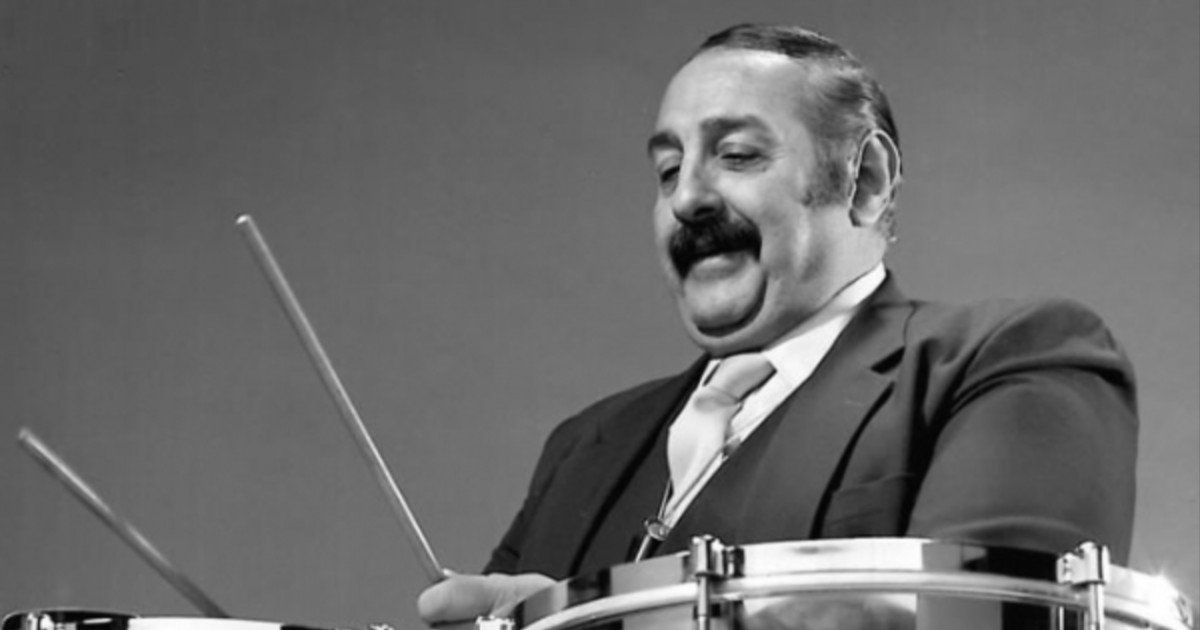
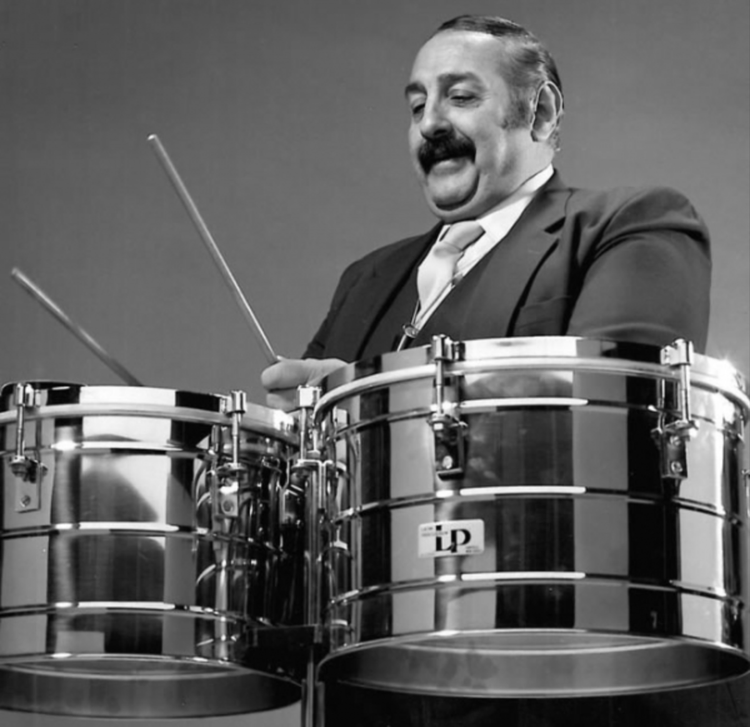
1931–2009 · Brooklyn, New York
The New York timbalero who anchored Eddie Palmieri's La Perfecta, helped develop the N.Y.-style mozambique on the timbales and led Libre for more than 30 years.
- Played with
- Tito Puente, Tito Rodríguez, Eddie Palmieri, Andy González
Manny Oquendo (1931–2009) spent part of his childhood living one floor above a record store in El Barrio, and in a way he never left it. The classic Cuban records of the '40s shaped the way he played for more than 60 years. He brought that sound to Eddie Palmieri's La Perfecta, helped develop the N.Y.-style mozambique on the timbales, and led his own band, Libre, for more than 30 years. His approach fit in one line: "First of all, you shouldn't overplay," he told Latin Beat in 1997. If a teacher has ever encouraged you to serve the music first, you're hearing an idea Manny lived by for more than 60 years.
From Brooklyn to the Palladium
José Manuel Oquendo was born on January 1, 1931, in Williamsburg, Brooklyn, to Puerto Rican parents. The family's first home was on South Fourth Street. Before long they moved to Spanish Harlem, and for a while they lived one floor above Almacenes Hernández, one of El Barrio's first Latin record stores. Later they moved to Kelly Street in the Bronx. The tres master Arsenio Rodríguez lived close by, and the Palmieri brothers grew up playing stickball on the same block.
Like a lot of us, Manny was drumming on school desks, doors and mailboxes before he ever had a drum. At 15 he started on a trap set. He later took lessons with the well-known teacher Sam Ulano, who was also teaching a young Max Roach, but it was the timbales and bongó that he settled on.
He didn't wait long to get on a bandstand. In 1947, still a teenager, he was playing timbales at the Triborough Theater in Harlem, where the legendary Chano Pozo sat in. Around the same time he was subbing for Ubaldo Nieto in Machito's Afro-Cubans. By 1950 he was playing bongó in Tito Puente's orchestra at the Palladium, right in the middle of the mambo era.
Through the '50s he also played with José Curbelo, Tito Rodríguez and the singer Vicentico Valdés, sharing the percussion section in Vicentico's band with conguero Tommy López. He picked up work outside the Latin bands too, in Billy Taylor's rhythm section and on Jackie Gleason's TV show. Then, in the mid-'50s, a young pianist named Eddie Palmieri joined Vicentico's band. It was the start of a partnership that would last more than a decade.
La Perfecta and the Mozambique
By 1962 Manny was playing in Eddie's new band, Conjunto La Perfecta. Eddie had taken the charanga format and swapped the violins for two trombones next to the flute, a sound his brother Charlie nicknamed the "trombanga." Manny sat right in the middle of it on timbales and bongó.
Around 1965 he took the mozambique, the rhythm Pello el Afrokan had built out of the Cuban comparsa, and worked it out on the timbales. You can hear it all over Palmieri's records from those years, on albums like Mambo con Conga Is Mozambique (Tico) and Molasses (1967). You can also hear Manny on Bamboléate (1967), the album that brought La Perfecta together with vibraphonist Cal Tjader.
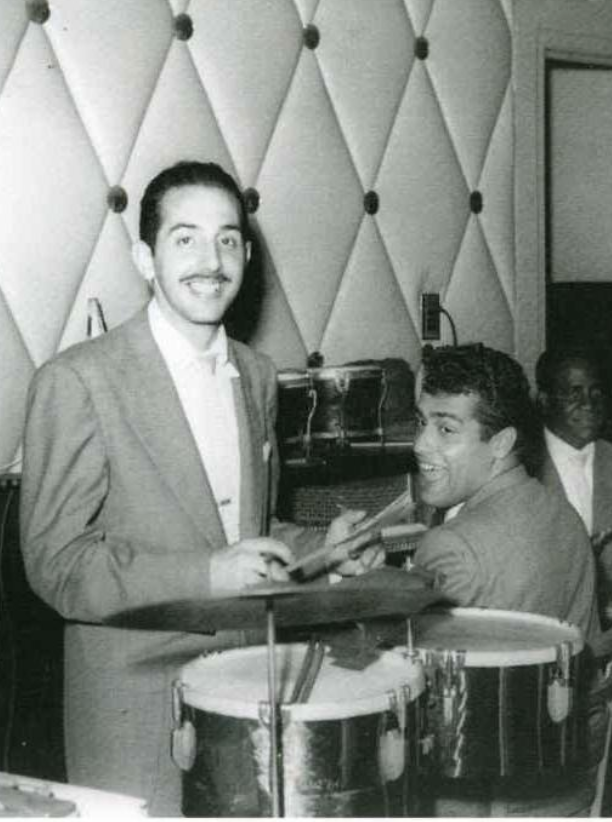
Manny & Charlie Palmieri
Libre
By the early '70s Manny was part of a circle of New York musicians digging into the roots of the music. Some of that happened at jam sessions in the González family's basement in the Bronx. That circle also gathered at René López's listening sessions, where the rule, as Andy González put it, was "No talking during the playing of the record." If anybody talked, he said, "we would say, 'Shut up.'"
Two groups came out of that circle. In 1974 Manny and bassist Andy González started their own band, Conjunto Libre, later known simply as Libre. A year later the larger collective, Grupo Folklórico y Experimental Nuevayorquino, played the Smithsonian Folklife Festival, with Manny on timbales. The Grupo made two albums, Concepts in Unity (1975) and Lo Dice Todo.
Libre kept the Cuban and Puerto Rican rhythms at the center and mixed in jazz and the street energy of 1970s New York. Over the years it made 12 albums. Its best-known hit was "Little Sunflower" (1983). In 1986 the band played the Statue of Liberty centennial and toured Puerto Rico and Europe, from Berlin to Holland and France. In 2008 it was honored with an appearance at Puerto Rico's Día Nacional de la Salsa.
Manny led Libre for the rest of his life, and it became something of a finishing school for many well-known Latin musicians. Its alumni include trombonists Papo Vázquez, Jimmy Bosch and Steve Turre, flutists Dave Valentín and Néstor Torres, singer Herman Olivera, and pianist Oscar Hernández, who later founded the Spanish Harlem Orchestra.
The Old-School Master
Manny played the way those old records sounded. What set him apart wasn't speed or flash. His playing was intentionally understated, built on the traditional Cuban style of the '40s. His first job was keeping the groove and supporting the group.
His solos built gradually. As Andy González put it, "All those beats that he plays in his solos, those are rumbero beats," straight out of the rumba. Instead of firing everything off at once, Manny built a solo up, so by the time he brought the band back in, the place was on fire. His complaint about a lot of timbaleros, as historian René López remembered it, was that "they say it all at the beginning, and are saying nothing at the end."
He was just as particular about his sound. Andy González went with him to the bell makers, where Manny would test hundreds of bells before he heard what he was after. "Bells can be shaped and welded wrong, and you hear a dissonance," González said.
And he never stopped listening. He could hear percussion on a recording and picture exactly how it was played. With the musicians around him, he led by example, in rehearsal and by pointing them to the classic records. He'd been doing that for a long time. When a 14-year-old Eddie Palmieri recognized him from Puente's band and asked for a piano solo to study, Manny recommended Conjunto Modelo's "Viejo Socarrón."
Timeline
1931Born January 1 in Williamsburg, Brooklyn
1947Plays timbales at the Triborough Theater, where Chano Pozo sits in
1950Playing bongó in Tito Puente's orchestra at the Palladium
1962Playing in Eddie Palmieri's La Perfecta
Around 1965Works the mozambique out on the timbales
1974Starts Conjunto Libre with bassist Andy González
1975Grupo Folklórico y Experimental Nuevayorquino plays the Smithsonian Folklife Festival
1986Libre plays the Statue of Liberty centennial
2008Reunites with the Grupo at the Smithsonian Folklife Festival
2009Dies in the Bronx on March 25, at 78
Selected Recordings
La Perfecta (Eddie Palmieri, Alegre, 1962): the debut of Palmieri's trombanga, with Manny on timbales
Mambo con Conga Is Mozambique (Eddie Palmieri, Tico): the mozambique worked out on timbales
Molasses (Eddie Palmieri, 1967): more of the mozambique on timbales
Bamboléate (Eddie Palmieri and Cal Tjader, 1967): La Perfecta with vibraphonist Cal Tjader
Concepts in Unity (Grupo Folklórico y Experimental Nuevayorquino, Salsoul, 1975): Afro-Cuban and Puerto Rican folkloric traditions, with Manny on timbales
Lo Dice Todo (Grupo Folklórico y Experimental Nuevayorquino): the Grupo's second album
Con Salsa... Con Ritmo, Vol. 1 (Conjunto Libre, Salsoul, 1976): Libre's first album
Libre Increíble (Salsoul, 1981)
Ritmo, Sonido y Estilo (Libre, Montuno, 1983): includes their take on Freddie Hubbard's "Little Sunflower," the band's best-known hit
Mejor Que Nunca (Libre, Milestone, 1994): Manny still leading the band 20 years in
Awards & Recognition
Manny's recognition came from the musicians rather than from trophies and accolades. For more than three decades he led Libre, which trained some of the best Latin jazz players of their generation. He also played with Grupo Folklórico y Experimental Nuevayorquino. In 2008 he reunited with the group at the Smithsonian Folklife Festival in Washington, D.C., more than 30 years after their 1975 appearance there. His timbale solos were transcribed for drummers to study. René López remembered a phrase Cuban trumpeter Alfredo "Chocolate" Armenteros used about him, four words that sum him up: "Manny sabía como entregar." Manny knew how to deliver. After he died, Libre planned tribute concerts for him at the Bronx Museum and at St. Peter's Church in Manhattan.
Legacy
Manny's legacy lives on in the players he helped along the way. A generation of Latin jazz musicians learned on Libre's bandstand and carried his way of playing into bands of their own.
In the end, his music came back to the neighborhood where it started. One of his last gigs, early in 2009, was a Libre show at the Julia de Burgos Cultural Center on Lexington Avenue and 106th Street, a few blocks from where he grew up in El Barrio.
Manny Oquendo's story is a reminder that great percussion is about taste and time, and serving the music first. If his approach has you inspired to build that kind of foundation for yourself, CongaChops.com is a great place to start.
Start your 7-day free trialRisk free. Cancel anytime.
More Percussion Profiles
 Tito Puente
 Willie Bobo
Learn to play
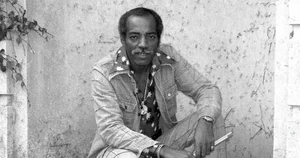
Photo credits: portrait by Martin Cohen.