
Willie Bobo (1934–1983) was one of the most versatile percussionists of his generation. A masterful timbalero, conguero, and drummer, he moved effortlessly between Afro-Cuban jazz, R&B, boogaloo, and pop over a career that took him from the bandstands of Spanish Harlem to the studios of Los Angeles — and his recording of "Evil Ways" would go on to become one of the most famous songs in Latin rock.
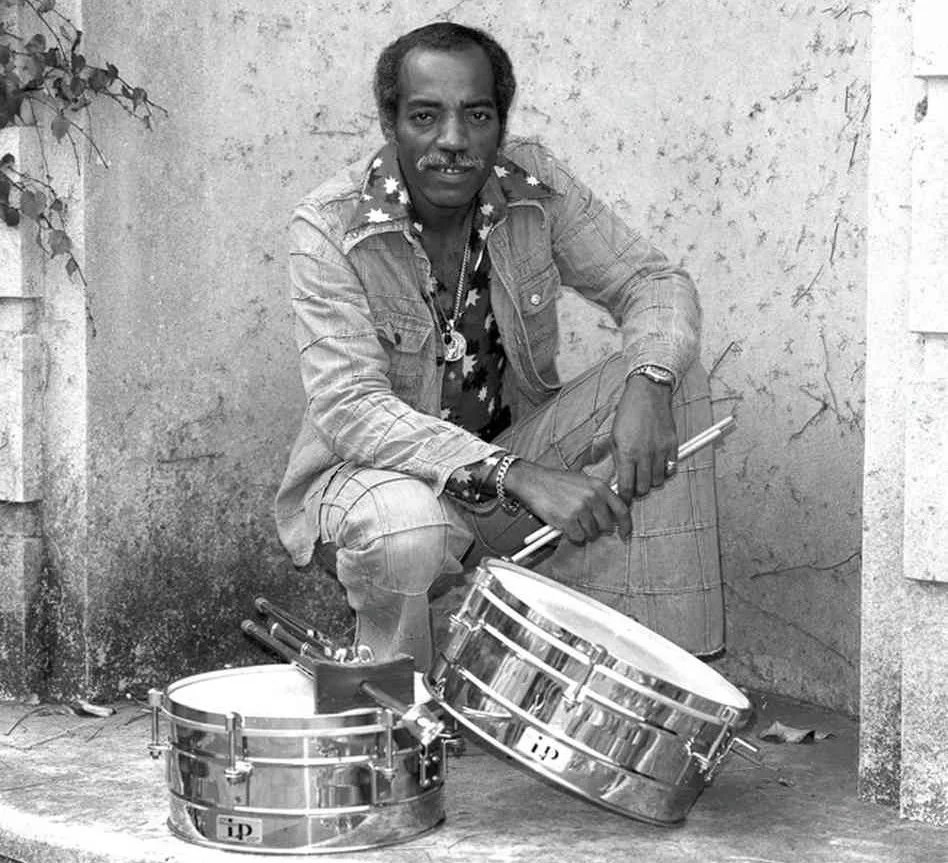
Photo by Martin Cohen
FROM SPANISH HARLEM TO THE BANDSTAND
Willie Bobo was born William Correa on February 28, 1934, in Spanish Harlem, New York City, the son of Puerto Rican parents. His father played the cuatro, the small guitar-like instrument of Puerto Rico, and the young Correa grew up surrounded by the music of his neighborhood. As a boy he worked as a band boy for Machito's Afro-Cubans, one of the most important Latin bands of the era, and taught himself the bongos as a teenager before moving on to congas, timbales, and drums.
His most important early education came from Mongo Santamaría. Correa met the Cuban conga master shortly after Mongo arrived in New York, and in exchange for acting as his translator, he received lessons in Afro-Cuban technique from one of its greatest practitioners. It was around this time that he got his enduring nickname: the jazz pianist Mary Lou Williams is credited with giving him the name "Bobo" when they recorded together in the early 1950s.
From roughly 1954 to 1957, Bobo played in Tito Puente's band as part of a percussion section that also included his mentor Mongo — the same group that produced the landmark all-percussion recordings of the mid-1950s. His first major exposure on record came with the pianist George Shearing on The Shearing Spell (1955). When Cal Tjader recruited Bobo and Santamaría for his Modern Mambo Quintet, Bobo found himself at the center of the West Coast Latin jazz scene, and in 1960 he reunited with Mongo for the album Sabroso! It was during these years that he recorded the enduring Latin jazz standard "Afro-Blue" with Santamaría.
A PERCUSSIONIST WITHOUT BORDERS
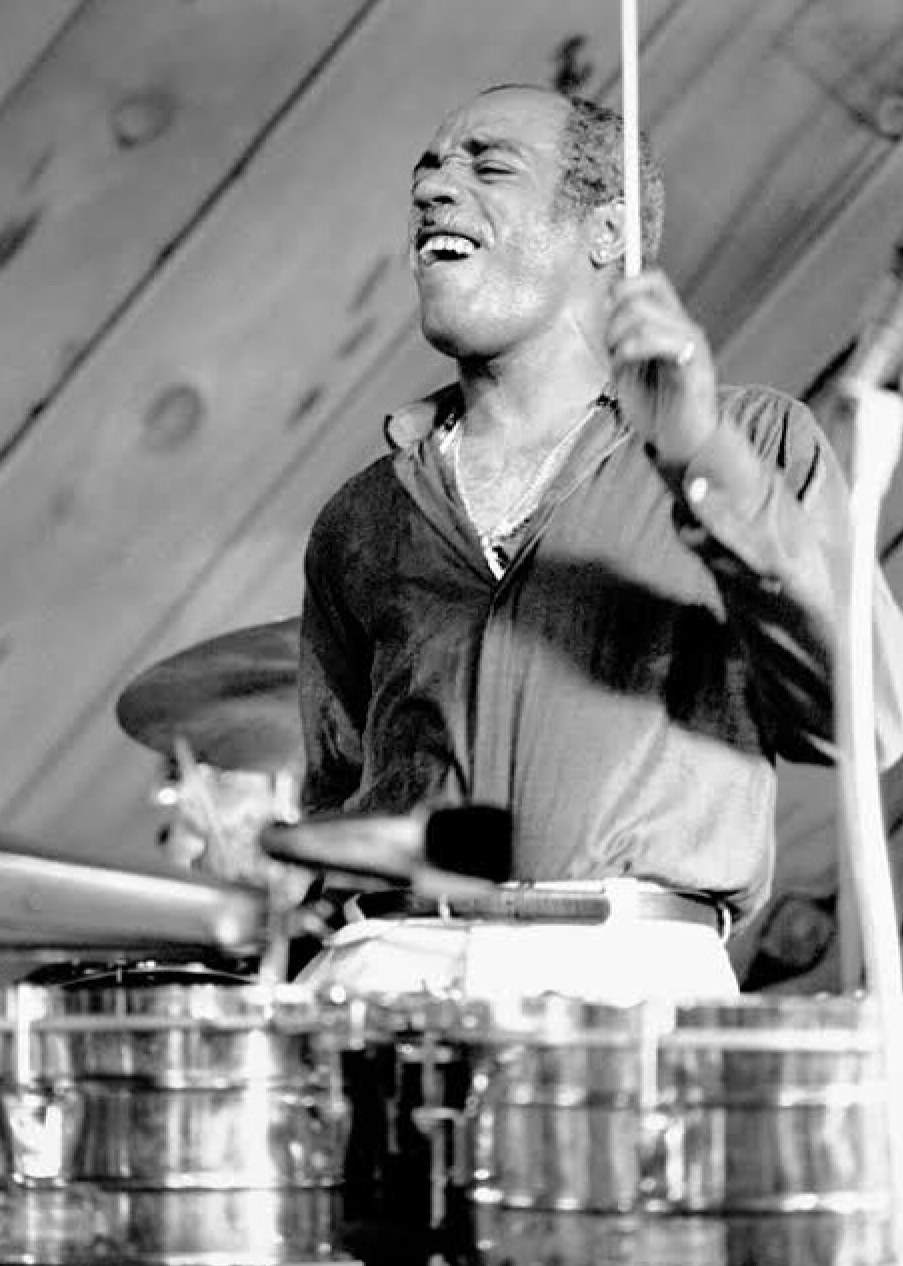
Photo by Brian McMillen
What defined Willie Bobo was his refusal to be confined to any single style. He was a serious, swinging Latin percussionist rooted in the Afro-Cuban tradition, but he moved just as naturally into jazz, R&B, soul, and pop, and he became one of the key figures in the Latin soul and boogaloo sounds of the 1960s. He recorded with Herbie Mann and appeared on Herbie Hancock's Blue Note album Inventions and Dimensions, and after the success of Cal Tjader's Soul Sauce — a record he was central to — he launched his own band with the backing of Verve Records.
His 1965 album Spanish Grease became his best-known record, its title track his signature tune, and its easy, danceable Latin-soul groove made a deep impression on a young Carlos Santana. The connection went even further: Bobo's 1967 recording of "Evil Ways" — a song written by Clarence "Sonny" Henry, with Carlos "Patato" Valdés on congas — was the original version of the song that, two years later, became Santana's first hit single and one of the defining songs of Latin rock. Santana would also take up Bobo's "Fried Neck Bones and Some Home Fries," another sign of how directly Bobo's grooves fed the music of the next generation.
In the 1970s Bobo moved to Los Angeles, where he became an in-demand session musician — recording with Carlos Santana among others — and a familiar face on television. His versatility, his showmanship, and his deep sense of groove made him one of the most recognizable percussionists of his era.
SELECTED RECORDINGS
1956 – Puente in Percussion (Tito Puente, Tico Records): One of the great all-percussion summits, featuring Bobo alongside Tito Puente, Mongo Santamaría, and Carlos "Patato" Valdés.
1960 – Sabroso! (Mongo Santamaría, Fantasy): Bobo's reunion with his mentor Mongo, a high point of early Afro-Cuban jazz on the West Coast.
1963 – Bobo! Do That Thing (Tico Records): Bobo's early recording as a leader, marking the start of his own bandleading career.
1965 – Spanish Grease (Verve): His best-known album, and home to his signature tune — an easy Latin-soul groove that helped shape the sound of Latin rock.
1965 – Soul Sauce (Cal Tjader, Verve): The hugely successful Tjader album that Bobo was central to, one of the defining Latin jazz records of the decade.
1967 – Bobo Motion (Verve): Features Bobo's original recording of "Evil Ways," later a breakthrough hit for Santana.
AWARDS & RECOGNITION
Willie Bobo's recognition lies less in formal awards than in the extraordinary reach of his influence. His records were studied and absorbed by the musicians who built Latin rock, most famously Carlos Santana, and his songs entered the repertoire of a generation that reached far beyond the Latin jazz world. His legacy also passed directly to his family: his son, Eric Bobo, became a percussionist in his own right, performing with Cypress Hill and touring with the Beastie Boys, carrying the family's rhythmic tradition into hip-hop and rock.
LEGACY
Willie Bobo died on September 15, 1983, in Los Angeles, at the age of 49, following a battle with cancer. He left behind a body of work that captured a rare kind of musical freedom — a percussionist equally at home in Afro-Cuban jazz, R&B, boogaloo, and pop, who never let the boundaries between genres limit where his music could go. Through the records he made, the hits his grooves inspired, and the family that carried his name forward, Willie Bobo remains one of the most distinctive and widely felt percussionists Latin music has ever produced.
Willie Bobo's story is a reminder that a deep groove and an open mind can take a player anywhere. If his journey has you inspired to explore Latin percussion for yourself, CongaChops.com is a great place to start.

START YOUR FREE TRIAL TODAY