
Ray Barretto (1929–2006) was one of the most recorded congueros in the history of Latin music — a Brooklyn-born son of Puerto Rican immigrants whose hard-hitting conga style and restless musical curiosity carried him from the bebop stages of 1950s New York to the heights of the Fania era and beyond. Among the first percussionists to bring the conga drum into the standard jazz combo, Barretto spent five decades expanding the role of the instrument across virtually every genre imaginable.
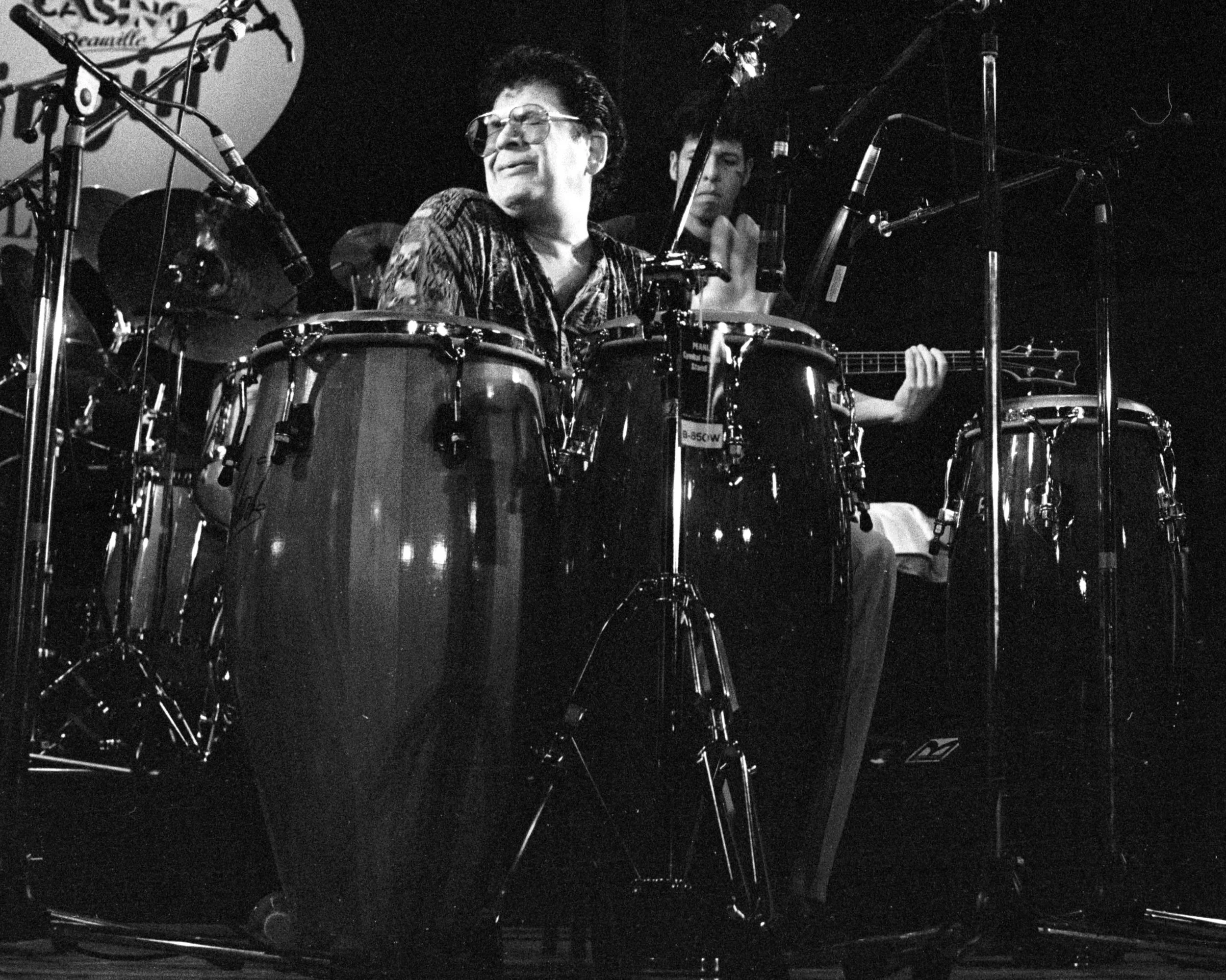
Swinging Deauville 1991 - By Roland Godefroy
FROM BROOKLYN TO THE BANDSTAND
Raymundo Barretto was born on April 29, 1929, in Brooklyn, New York, and raised in Spanish Harlem and the Bronx. Surrounded from an early age by the Latin music of his community as well as the swing bands of Duke Ellington and Count Basie, his path as a percussionist took shape during his Army service in Germany, where he heard Dizzy Gillespie's recording of “Manteca” featuring conguero Chano Pozo. By his own account, that was the moment he knew. He began sitting in on jam sessions at a GI jazz club in Munich, and upon returning to New York in 1949, taught himself to play the conga drum and began working his way into the city's Latin music scene.
After early stints with Eddie Bonnemere's Latin Jazz Combo and Cuban bandleader José Curbelo, Barretto landed one of the most coveted seats in Latin percussion in 1957: replacing Mongo Santamaría in Tito Puente's band, with whom he recorded the landmark Dance Mania. His four years with Puente established him as one of the most sought-after congueros in New York, and throughout the early 1960s he became the go-to conga player for jazz recording sessions — appearing on albums by Gene Ammons, Cannonball Adderley, Kenny Burrell, Lou Donaldson, Freddie Hubbard, Wes Montgomery, and many others. In 1962, his charanga hit “El Watusi” became the first Latin song to crack the Billboard Top 20, introducing his name to a far wider audience.
His move to Fania Records in 1967 marked the beginning of his most celebrated chapter as a bandleader. Over the following decade he produced some of the defining records of the salsa era — Acid, Que Viva la Música, Indestructible, and Barretto among them — while simultaneously serving as musical director of the Fania All-Stars. He won a Grammy Award in 1990 for Ritmo en el Corazón, a collaboration with Celia Cruz, and was inducted into the International Latin Music Hall of Fame in 1999. In the early 1990s he formed the New World Spirit jazz sextet, which he led until his death on February 17, 2006.
EL REY DE LAS MANOS DURAS
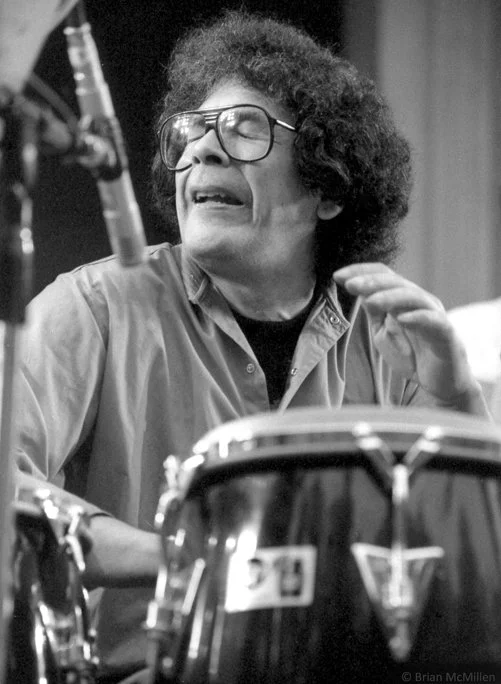
Berkeley Jazz Festival 1982 - By Brian McMillen
What distinguished Ray Barretto from virtually every other conguero of his generation was the breadth of the musical world he inhabited. Raised on the Latin music of Spanish Harlem alongside the swing bands of Ellington and Basie, and galvanized by the Afro-Cuban jazz of Dizzy Gillespie and Chano Pozo, he was formed by all of it simultaneously — and his conga playing reflected that from the start. His style was defined by an exceptionally powerful sound, a rock-steady groove, and an improvisational instinct that became a reference point for generations of Latin percussionists to come. His hands were famously large, earning him the nickname “rey de las manos duras” — king of the hard hands — and his sound was equally imposing.
His versatility also made him one of the most in-demand session percussionists of his era, with conga work spanning jazz, Latin, pop, and rock — including sessions with the Rolling Stones and Crosby, Stills and Nash. As a bandleader he was consistently ahead of the curve, incorporating boogaloo, funk, and fusion influences into his music across multiple decades, and later returning to jazz with a depth and seriousness that earned him the DownBeat critics poll for percussion in both 2003 and 2005.
SELECTED RECORDINGS
1958 – Dance Mania (Tito Puente, RCA): Barretto's first recorded session, and one of the greatest Afro-Cuban big band albums ever made.
1968 – Acid (Fania Records): A landmark of the boogaloo era and one of Barretto's most celebrated albums as a bandleader.
1972 – Que Viva la Música (Fania Records): Features “Cocinando,” which opened the soundtrack to the Fania All-Stars film Our Latin Thing.
1975 – Barretto (Fania Records): A Grammy-nominated album featuring “Guarare,” one of the most beloved salsa tracks of the decade.
1979 – Rican-Struction (Fania Records): Named Best Album of 1980 by Latin NY magazine, with Barretto crowned Conga Player of the Year.
1988 – Ritmo en el Corazón (Ray Barretto & Celia Cruz, Fania Records): The Grammy Award-winning collaboration between two giants of Latin music.
AWARDS & RECOGNITION
Barretto's accolades span four decades of recording. He won the Grammy Award for Best Tropical Latin Performance in 1990 for Ritmo en el Corazón with Celia Cruz, following two earlier Grammy nominations for Barretto (1975) and Barretto Live...Tomorrow (1976). He was inducted into the International Latin Music Hall of Fame in 1999, voted Jazz Percussionist of the Year by the Jazz Journalists Association in 2004, and won the DownBeat critics poll for percussion in both 2003 and 2005. In a final honor, the National Endowment for the Arts named Barretto a Jazz Master in 2006, the United States' highest distinction for a jazz musician — awarded just weeks before his passing.
LEGACY
Barretto died of heart failure on February 17, 2006, in New Jersey, just weeks after learning he had been named an NEA Jazz Master. His body was flown to Puerto Rico, where he received formal honors from the Institute of Puerto Rican Culture. He is widely credited as the first American-born percussionist to fully integrate the conga drum into jazz, and his refusal to stay confined to any single genre — moving fluidly between salsa, boogaloo, fusion, and straight-ahead jazz across five decades — set a template for the kind of musical curiosity that defines the most respected congueros today.
If reading about one of the legendary masters of this instrument has you feeling inspired, CongaChops.com is the best place to continue the journey.

START YOUR FREE TRIAL TODAY