
Manny Oquendo (1931–2009) was one of the most respected timbaleros and bongoseros in the history of Latin music. A master of the old-school tradition — the deeply rooted Cuban style of the 1940s and 50s — he built a career of more than sixty years on the principle that a percussionist serves the music first. His understated, unshakably swinging playing anchored Eddie Palmieri's La Perfecta and, later, his own celebrated band, Conjunto Libre, and made him one of the most influential and studied percussionists New York ever produced.
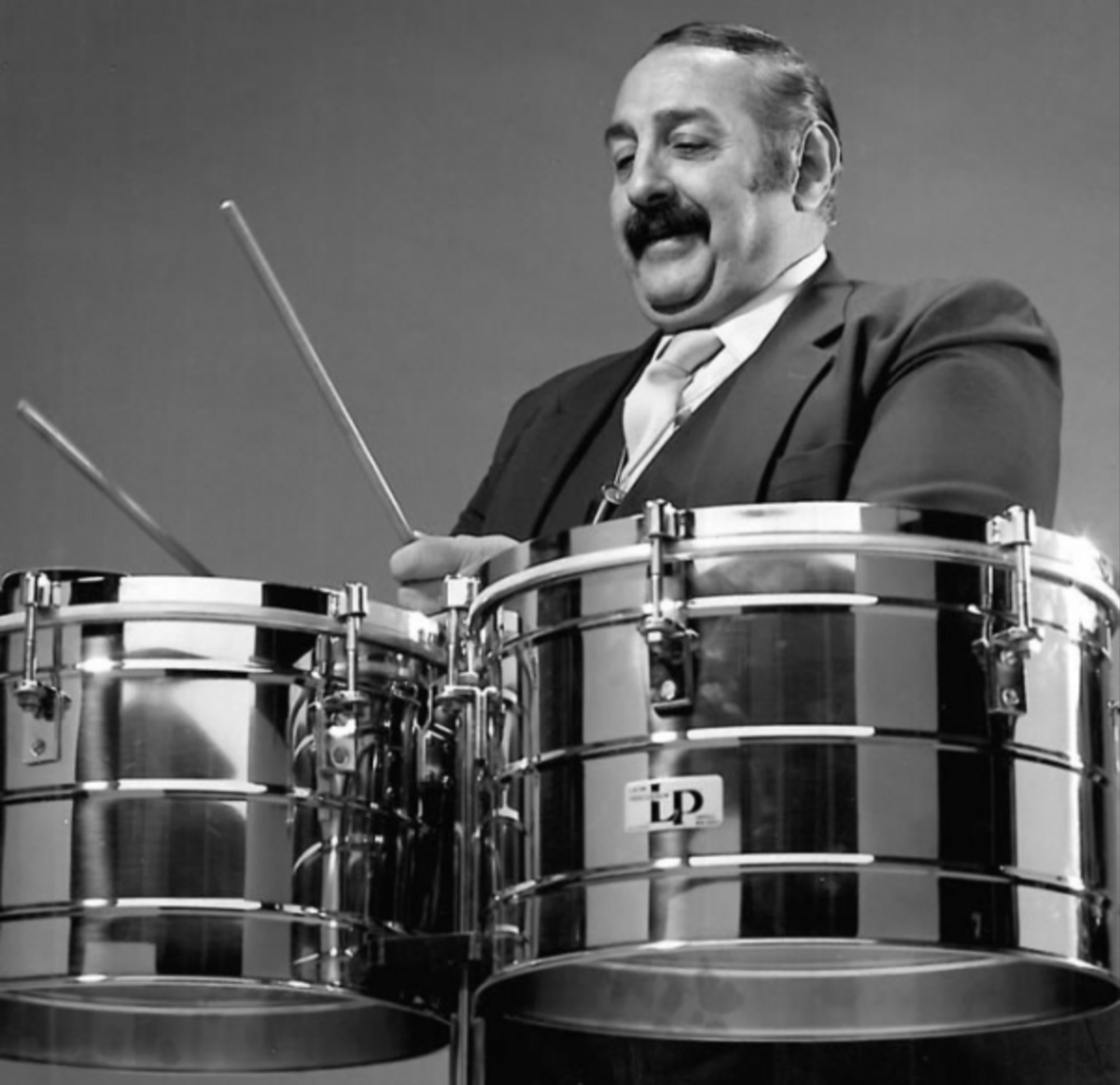
Photo by Martin Cohen
FROM BROOKLYN TO THE PALLADIUM
José Manuel Oquendo was born on January 1, 1931, in the Williamsburg section of Brooklyn, to Puerto Rican parents, and spent most of his formative years in Spanish Harlem, later moving to Kelly Street in the Bronx. He grew up surrounded by music — for a time the family lived one flight above Almacenes Hernández, one of El Barrio's first Latin record stores, at 1600 Madison Avenue — and on Kelly Street his neighbors included figures like the Cuban tres master Arsenio Rodríguez and the Palmieri brothers. He began studying percussion in the mid-1940s, starting on trap drums before dedicating himself to the timbales and bongos.
By 1950 he had joined the orchestra of Tito Puente as a bongo player, performing at the Palladium ballroom during the height of the mambo era. Over the following years he worked with Tito Rodríguez and the singer Vicentico Valdés, building a reputation as a percussionist grounded in the authentic Cuban style he had absorbed from the recordings of the great Havana bands. In 1962 he joined Eddie Palmieri's groundbreaking Conjunto La Perfecta — a smaller, trombone-driven band that broke from the big-band format in favor of a looser, more improvisational sound. It was with La Perfecta that Oquendo helped develop and popularize the New York style of the mozambique, a Cuban carnival rhythm he adapted for the timbales, introducing it to North American dancers.
In 1974, after more than a decade with Palmieri, Oquendo joined with the bassist Andy González to co-found his own band, Conjunto Libre — later known simply as Libre. Growing out of the same circle that produced the groundbreaking Grupo Folklórico y Experimental Nuevayorquino, which debuted at the Smithsonian Folklife Festival in 1975, Libre fused traditional Afro-Cuban and Puerto Rican rhythms with jazz and the energy of 1970s New York. Oquendo led the band for the rest of his life, and it became known as a kind of finishing school for Latin jazz musicians, with alumni including trombonists Papo Vázquez, Jimmy Bosch, and Steve Turre, flutist Dave Valentín, and pianist Oscar Hernández.
THE OLD-SCHOOL MASTER
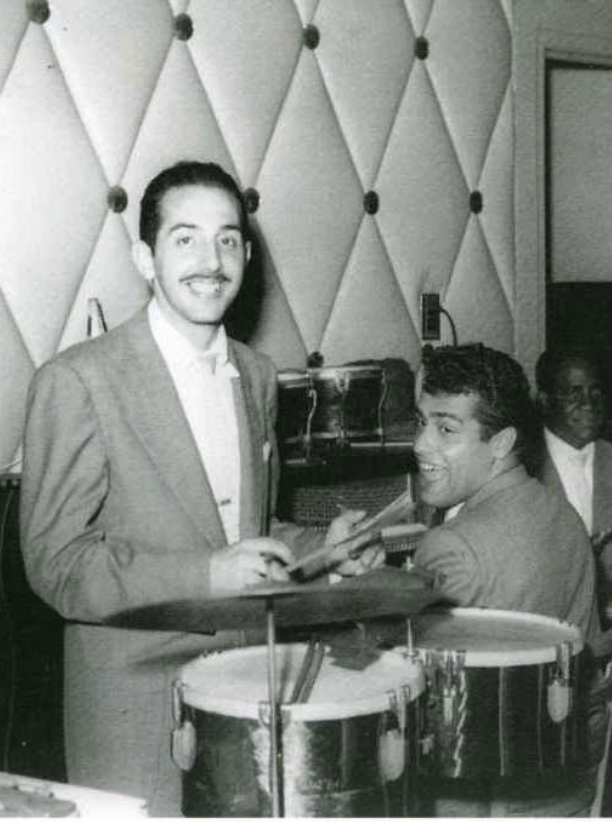
Manny & Charlie Palmieri
What set Manny Oquendo apart was not speed or flash — it was taste, feel, and an unshakable sense of tradition, heard most clearly in the way he soloed and accompanied. His playing on the timbales and bongos was famously understated, built on the sparse, straightforward phrasing of the Cuban timbaleros of the 1940s, and he held to a simple philosophy that can be heard throughout his career: never overplay. He believed the timbalero's first job was to keep the beat and support the group, and his solos said a great deal with very little, drawing on the folkloric rhythmic language of the rumba quinto rather than technical display. That old-school approach to both soloing and accompaniment was uniquely his, and it became a model that generations of players have studied since.
That disciplined, deeply rooted approach made Oquendo a living link to the origins of the music. He was a walking encyclopedia of the recordings and rhythms of the classic Cuban bands, and he taught the musicians around him as much through rigorous rehearsal and by pointing them toward historic records as through any formal instruction. Generations of timbaleros have studied his style, and his insistence on serving the music above all else became a school of thought in itself — a standard against which taste and feel on the instrument are still measured.
SELECTED RECORDINGS
1962 – La Perfecta (Eddie Palmieri, Alegre Records): The debut of Palmieri's trombone-driven band, with Oquendo's timbales at the center of a sound that changed New York salsa.
1975 – Concepts in Unity (Grupo Folklórico y Experimental Nuevayorquino, Salsoul): A landmark recording of the groundbreaking collective Oquendo helped form, exploring Afro-Cuban and Puerto Rican folk traditions.
1976 – Con Salsa... Con Ritmo, Vol. 1 (Conjunto Libre, Salsoul): The debut album of the band Oquendo co-founded and led, a cornerstone of the 1970s New York salsa scene.
1981 – Libre Increíble (Salsoul): One of the defining albums of Libre's classic era.
1983 – Ritmo, Sonido y Estilo (Montuno): Features the band's celebrated Latin arrangement of Freddie Hubbard's "Little Sunflower," a favorite of salsa and jazz dancers alike.
AWARDS & RECOGNITION
Manny Oquendo's recognition came in the form of deep and lasting respect within the music rather than in trophies. For more than three decades he co-led one of the most acclaimed bands in Latin music, and his band Libre earned a reputation as a proving ground for many of the finest Latin jazz and salsa musicians of their generation. Through his role in the seminal Grupo Folklórico y Experimental Nuevayorquino, his long partnership with the González brothers, and his standing as an authority on the roots of the music, Oquendo was regarded across the Latin music world as one of its true keepers of tradition — a musician other musicians revered.
LEGACY
Manny Oquendo died on March 25, 2009, in the Bronx, at the age of 78. He left behind more than sixty years of music and a philosophy of playing that continues to shape percussionists today. In an era that often prized speed and spectacle, Oquendo stood for the opposite — for taste, for restraint, and for a profound respect for the tradition he carried. His playing remains a model of how much a timbalero can say by saying only what the music needs, and his influence runs through every player who has learned that, on the timbales and the bongos, feel, taste, and time matter more than anything else.
Manny Oquendo's story is a reminder that great percussion is about taste and time— about serving the music first and foremost. If his approach has you inspired to build that kind of foundation for yourself, CongaChops.com is a great place to start.
START YOUR FREE TRIAL TODAY